What Is the Correct Tire Pressure for Your Ford F150
The correct tire pressure for a Ford F150 typically ranges between 32 and 35 PSI, depending on your model year and trim level. Always check the sticker on the driver’s side door jamb or your owner’s manual for the exact number. Keeping your Ford F150 tire pressure at the right level boosts safety, improves fuel economy, and helps your tires last longer.
Your Ford F150 is a workhorse. Whether you use it for hauling, towing, or just getting to work, the tires are the only part of the truck that actually touch the road. That makes tire pressure one of the most important things you can manage.
So what is the correct tire pressure for a Ford F150? The answer is not a single number. It depends on your model year, your trim level, and whether you are pulling a heavy load. But the good news is that finding the right number is straightforward once you know where to look.
In this guide, we walk you through everything you need to know. From the recommended PSI for different F150 trims to how often you should check your tires, we have you covered. Let us get into it.
Key Takeaways
- Check the door jamb sticker: This is the most reliable source for your Ford F150 recommended tire pressure.
- Check tire pressure when cold: Driving heats up tires and gives false readings. Always check before driving.
- Don’t trust the tire sidewall: The max PSI on the sidewall is not the recommended pressure for your truck.
- TPMS alerts are helpful but not foolproof: Your Ford F150 tire pressure monitoring system warns you but should not replace regular manual checks.
- Tire pressure affects towing: Proper inflation is critical when pulling a trailer with your F150.
- Seasonal changes matter: Air pressure drops in cold weather, so adjust your tire pressure seasonally.
📑 Table of Contents
- What Is the Recommended Tire Pressure for a Ford F150?
- Why Correct Tire Pressure Matters
- How to Check Your Tire Pressure
- Tire Pressure by Ford F150 Model Year and Trim
- Tire Pressure When Towing
- Common Tire Pressure Mistakes to Avoid
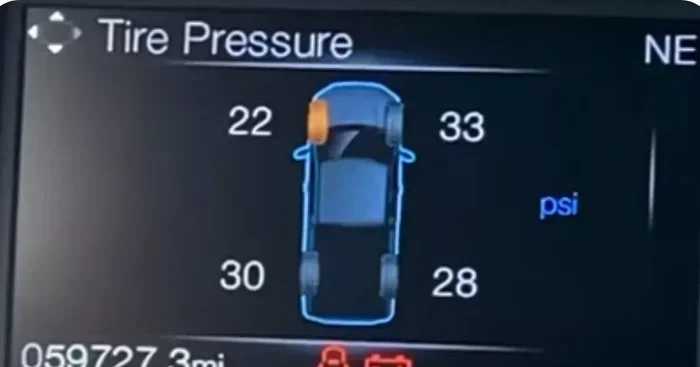
- How the Ford F150 Tire Pressure Monitoring System Works
- Seasonal Tire Pressure Tips for Ford F150 Owners
- How to Know When It Is Time for New Tires
- Final Thoughts
What Is the Recommended Tire Pressure for a Ford F150?
The Ford F150 recommended tire pressure is not a one-size-fits-all number. Most Ford F150 models run between 32 and 35 PSI when fully loaded with passengers and cargo. But the exact number varies. Here is how to find yours.
Check the Driver’s Side Door Jamb
This is the best and easiest way to find your correct tire pressure. Open the driver’s door and look for a sticker on the door frame. It lists the tire size, the recommended tire pressure for front and rear tires, and the maximum load capacity. This sticker is put there by Ford engineers who tested your specific model extensively.
Consult the Owner’s Manual
If the sticker is missing or faded, your owner’s manual has the same information. Look in the maintenance or specifications section. The manual will also explain how to read the tire pressure monitoring system on your dashboard.
Check the Tire Information Placard
Some older Ford F150 models have the tire information placard on the glove box door or inside the fuel filler door. If you cannot find it on the door jamb, check these spots next.
Why Correct Tire Pressure Matters
You might think tire pressure is a small detail. It is not. The right tire inflation affects almost every part of how your truck performs. Here is why it matters so much.
Safety First
Underinflated tires are dangerous. They flex more than they should, which builds up heat. Over time, that heat can cause blowouts. Overinflated tires have a smaller contact patch, which means less grip on wet roads. Both situations increase your risk of a crash.
Keeping your Ford F150 tire pressure at the factory-recommended level gives you the best balance of grip, handling, and braking power. This is especially important when you are carrying heavy loads or driving in rain and snow.
Fuel Economy
Did you know that tire pressure can affect your gas mileage? Underinflated tires create more rolling resistance. That means your engine works harder and burns more fuel. The U.S. Department of Energy estimates that properly inflated tires can improve fuel economy by up to 3 percent. For a truck like the F150, that adds up over time.
Tire Life
Tires are expensive. A set of good tires for an F150 can cost several hundred dollars. Underinflated tires wear out the outer edges of the tread faster. Overinflated tires wear out the center of the tread. Either way, you lose tire life and spend money sooner than you need to.
Ride Comfort and Handling
The right tire pressure gives you a smooth, stable ride. Too little air makes the truck feel sluggish and unresponsive. Too much air makes the ride harsh and bouncy. Finding the sweet spot keeps your F150 feeling the way Ford designed it.
How to Check Your Tire Pressure
Checking your tire pressure is simple. You do not need to be a mechanic. Here is the step-by-step process.
Step 1: Get a Tire Pressure Gauge
You can buy a basic tire pressure gauge at any auto parts store for under fifteen dollars. Digital gauges are easy to read and very accurate. A pencil-style gauge also works fine. If you want a more permanent solution, a tire pressure monitoring system (TPMS) can give you live readings right from your dashboard.
Step 2: Check When the Tires Are Cold
This is important. Tire pressure rises as the tires heat up from driving. For the most accurate reading, check your tires before you drive or at least three hours after your last trip. If you have already been driving, wait for the tires to cool down.
Some people ask, “Can you pump a car tire with a bike pump?” The short answer is yes, in an emergency. But a bike pump is slow and not ideal for truck tires. A proper air compressor at a gas station or a portable tire inflator works much better for a Ford F150.
Step 3: Remove the Valve Cap
Unscrew the valve cap from the tire valve stem. Keep it in your pocket so you do not lose it.
Step 4: Press the Gauge Onto the Valve Stem
Press the gauge firmly onto the valve stem. You should hear a brief hiss of air. Hold the gauge steady until the reading stabilizes. Digital gauges give you a number right away. Analog gauges use a small bar that pops out to show the pressure.
Step 5: Compare to the Recommended PSI
Check the number against what the door jamb sticker says. If the pressure is low, add air. If it is high, let a little air out by pressing the small pin inside the valve stem. Recheck the pressure after adjusting.
Step 6: Replace the Valve Cap
Screw the valve cap back on. This keeps dirt and moisture out of the valve stem, which helps prevent slow leaks.
Tire Pressure by Ford F150 Model Year and Trim
The Ford F150 has been around for decades, and tire pressure specs have changed over the years. Here is a general breakdown to help you find the right number for your truck.
| Model Year Range | Typical Front PSI | Typical Rear PSI | Notes |
|---|---|---|---|
| 2015-2020 | 32-35 | 32-35 | Standard for most trims |
| 2021-2023 | 35-42 | 35-42 | Higher for XL and STX trims |
| 2024+ | 35-42 | 35-42 | Varies by bed size and trim |
These numbers are general guidelines. Always double-check with your specific model’s door jamb sticker or owner’s manual. The Ford F150 tire pressure for a Limited trim with 20-inch wheels may differ from a base XL with 17-inch wheels.
For example, the length of your truck bed does not directly change tire pressure, but it does affect the overall setup. If you are curious about specific bed dimensions, you can check our guide on how long a 6.5 foot truck bed is to better understand your F150’s specifications.
Tire Pressure When Towing
The Ford F150 is one of the best-selling trucks partly because it tows well. But towing puts extra stress on your tires. When you pull a trailer, your tire pressure needs to be at the higher end of the recommended range, or sometimes even above it.
Check the Door Jamb for Towing Specs
Many Ford F150 door jamb stickers have a separate section for towing. This section lists the recommended tire pressure when the truck is fully loaded or pulling a trailer. Always use the towing pressure, not the normal pressure, when you are hauling.
Why Towing Requires Higher Pressure
When you tow a trailer, the rear tires carry more weight. Higher tire pressure supports that extra load and prevents the tires from overheating. It also improves stability and handling, which is critical when you have hundreds or thousands of pounds behind your truck.
If you are planning a towing trip, make sure your tires are up to the task. Proper tire inflation is one of the easiest ways to prevent a tire failure on the highway. For more on towing capacity, you might also want to read about whether a 6 cylinder Tacoma can pull a trailer for comparison with other trucks.
Common Tire Pressure Mistakes to Avoid
Even experienced truck owners make mistakes with tire pressure. Here are the most common ones and how to avoid them.
Mistake 1: Relying Only on the Tire Sidewall
The number printed on the tire sidewall is the maximum pressure the tire can handle, not the recommended pressure for your truck. Using the sidewall number will overinflate your tires, which leads to a harsh ride and uneven wear. Always use the number from the door jamb sticker or owner’s manual.
Mistake 2: Only Checking Tires When the TPMS Light Comes On
Your Ford F150 has a tire pressure monitoring system that lights up when pressure drops too low. But by the time that light comes on, your tires are already significantly underinflated. Do not wait for the warning light. Check your tire pressure at least once a month.
Mistake 3: Ignoring Temperature Changes
Air pressure inside tires drops as the temperature drops. For every 10 degrees Fahrenheit the temperature falls, your tire pressure can drop by about 1 PSI. In winter, you may need to add air more frequently. In summer, check that you have not overinflated as the weather heats up.
Mistake 4: Forgetting the Spare Tire
Your spare tire needs attention too. A flat spare tire is useless in an emergency. Check the spare tire pressure at least twice a year. The correct pressure for your spare is usually listed on the spare tire itself or in the owner’s manual.
Mistake 5: Not Checking All Four Tires
It is easy to check only the tires that look low. But all four tires need to be at the correct pressure. Even one tire that is off by a few PSI can affect handling, fuel economy, and tire wear.
How the Ford F150 Tire Pressure Monitoring System Works
Most modern Ford F150 models come with a tire pressure monitoring system. This system uses sensors inside each tire to measure air pressure and send the data to your truck’s computer.
Direct TPMS vs. Indirect TPMS
Ford F150 models from 2015 and newer typically use direct TPMS. These have small sensors mounted inside each wheel that measure pressure directly. Older models may use indirect TPMS, which estimates tire pressure based on wheel speed sensors. Both systems are effective, but direct TPMS gives you more precise readings.
Resetting the TPMS Light
After you adjust your tire pressure, the TPMS light may stay on for a while. To reset it, drive the truck at or above 50 mph for a few minutes. The system should automatically recalibrate. If the light stays on, you may need to use the steering wheel controls to reset it manually, or the sensors may need replacement.
When to Replace TPMS Sensors
TPMS sensors have batteries that last about 5 to 10 years. When the battery dies, the sensor stops sending readings. If your TPMS light flashes when you start the truck and stays on, a sensor battery may be dead. Replacing the sensor is a quick job at most tire shops or Ford dealerships.
Seasonal Tire Pressure Tips for Ford F150 Owners
Your tire pressure needs change with the seasons. Here is how to manage them year-round.
Winter Tire Pressure
Cold weather lowers tire pressure. In the winter months, check your tires more often. You may need to add air every few weeks. The recommended pressure on your door jamb does not change with the season, so that is the number you should always target.
Summer Tire Pressure
Hot weather can increase tire pressure slightly. If you check your tires on a scorching summer day, the reading may be a bit higher than normal. This is normal. Do not let air out just because the heat raised the pressure. Check when the tires are cold for the most accurate reading.
Spring and Fall Adjustments
Spring and fall are great times to do a thorough tire pressure check. Temperatures are moderate, and you are not dealing with extreme cold or heat. Make it a seasonal habit to check all four tires plus the spare.
How to Know When It Is Time for New Tires
Even with perfect tire pressure, tires wear out over time. Here are signs that your Ford F150 needs new tires.
- Tread depth below 2/32 of an inch: Use the penny test. Insert a penny into the tread with Lincoln’s head facing down. If you can see the top of his head, your tread is too worn.
- Cracks or bulges in the sidewall: These indicate internal damage and are a safety hazard.
- Frequent air loss: If you are adding air more than once a month, there may be a slow leak.
- Vibration or pulling: Uneven tire wear or alignment issues can cause the truck to pull to one side.
- Age: Tires older than six years should be inspected closely, even if the tread looks fine. Rubber degrades over time.
When you do get new tires, make sure the tire size matches what your Ford F150 requires. Using the wrong size can affect your speedometer, handling, and safety. If you are doing any body work or bumper replacements, you might want to know how long it takes to fit a new bumper so you can plan your maintenance schedule accordingly.
Final Thoughts
The correct tire pressure for a Ford F150 is one of the simplest things you can do to keep your truck safe, efficient, and road-ready. Check the door jamb sticker, use a good tire pressure gauge, and make it a monthly habit. Do not rely on the TPMS light alone, and always account for seasonal temperature changes.
Your Ford F150 is built to work hard. Give it the tire care it deserves, and it will reward you with better fuel economy, a smoother ride, and longer-lasting tires. A few minutes of attention each month can save you hundreds of dollars and keep you and your family safe on the road.
Whether you are hauling cargo, towing a trailer, or just running errands, proper tire pressure is the foundation of a well-running truck. Start today. Grab a tire pressure gauge and check all four tires. It is one of the easiest and most impactful things you can do for your Ford F150.
Frequently Asked Questions
What PSI should my Ford F150 tires be at?
Most Ford F150 models require between 32 and 35 PSI for normal driving. When towing or hauling heavy loads, the recommended pressure may be higher, often between 35 and 42 PSI. Always check the door jamb sticker on the driver’s side door for the exact number for your specific model and trim.
Can I use the tire pressure number on the tire sidewall?
No. The number on the tire sidewall is the maximum pressure the tire can safely hold, not the recommended pressure for your truck. Using the sidewall number will overinflate your tires, leading to a harsh ride, reduced grip, and uneven tire wear. Always use the pressure listed on the door jamb sticker or in the owner’s manual.
How often should I check my Ford F150 tire pressure?
You should check your tire pressure at least once a month. Tires naturally lose about 1 PSI per month, and temperature changes can cause additional fluctuations. Check your tires before long trips and always when the tires are cold for the most accurate reading.
Why is my Ford F150 tire pressure light on even when the tires look fine?
The tire pressure monitoring system light can come on for several reasons. A sudden temperature drop can lower the pressure enough to trigger the light. A slow leak in one tire, a faulty TPMS sensor, or a dead sensor battery can also cause the light to stay on. Check your tire pressure with a manual gauge and add air if needed. If the light persists, have the TPMS system inspected.
Does tire pressure affect towing capacity?
Yes. Proper tire pressure is critical when towing. Underinflated tires can overheat under heavy loads, which increases the risk of a blowout. The correct tire pressure supports the extra weight and improves stability. Always check the towing section on your door jamb sticker for the recommended pressure when hauling a trailer.
Can cold weather cause the tire pressure light to come on?
Absolutely. Cold weather causes the air inside your tires to contract, which lowers the pressure. A drop of just 10 degrees Fahrenheit can reduce tire pressure by about 1 PSI. This is why tire pressure lights often appear in winter even when the tires were fine the day before. Simply adding air to the recommended PSI will turn the light off.
=== CONCLUSION ===
The correct tire pressure for your Ford F150 is not something to guess at. It is a precise number that Ford engineers determined through extensive testing. Find it on the door jamb sticker, check it monthly with a reliable gauge, and adjust for temperature changes and towing needs.
Proper tire pressure is the simplest form of truck maintenance, and the rewards are significant. Better safety, improved fuel economy, longer tire life, and a more comfortable ride all start with the right PSI. Make tire pressure checks a regular part of your truck maintenance routine, and your Ford F150 will serve you well for miles to come.