Can I Replace My Throttle Body Myself at Home Today
You can absolutely replace your throttle body yourself at home with basic tools and a little time. This guide covers everything from symptoms to step-by-step installation, so you can tackle the job confidently. Learn how to save money on throttle body replacement and avoid common DIY mistakes.
Your car’s throttle body controls the air that flows into the engine. When it gets dirty or fails, you might notice rough idle or a lack of power. Many owners wonder if they can fix this themselves. The good news is that replacing a throttle body is often a straightforward DIY job. You don’t need to be a professional mechanic to get it done. Throttle body replacement is one of the most common car maintenance tasks you can tackle at home.
In this guide, I’ll walk you through the entire process. You’ll learn what the throttle body does, how to spot a bad one, and exactly what tools you need. I’ll also share step-by-step instructions and common mistakes to avoid. By the end, you’ll feel confident tackling a throttle body replacement in your own garage.
Key Takeaways
- You can do it yourself: Replacing a throttle body is a manageable DIY job with basic tools.
- Save money: Avoid labor costs by handling the replacement at home.
- Know the symptoms: Rough idle, poor acceleration, and check engine lights signal a bad throttle body.
- Use the right parts: Ensure the new throttle body matches your vehicle’s specifications.
- Reset adaptations: After installation, reset the throttle body to clear error codes and adapt to the new unit.
- Take your time: Rushing leads to mistakes like over-tightening bolts or forgetting the gasket.
📑 Table of Contents
What Does a Throttle Body Do?
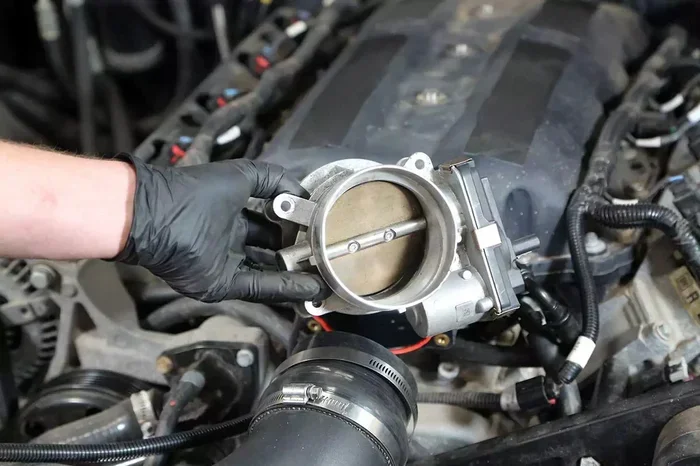
The throttle body is a simple but vital part of your fuel injection system. It sits between the air filter and the intake manifold. When you press the accelerator pedal, the throttle body opens to let more air into the engine. The engine control unit then adds the right amount of fuel. This creates the perfect air-fuel mixture for combustion.
A healthy throttle body ensures smooth idle and responsive acceleration. But over time, carbon buildup can restrict its movement. This leads to several throttle body symptoms. Recognizing these signs early can prevent bigger problems.
How It Controls Airflow
The throttle body works like a butterfly valve. The plate inside opens and closes based on your foot’s input. The throttle position sensor sends this data to the ECU. The ECU then adjusts the fuel injectors accordingly. A mass airflow sensor also measures the incoming air. Together, these components keep your engine running efficiently.
If the throttle body gets dirty, the plate can stick. This causes a rough idle or hesitation when you step on the gas. In modern cars, the electronic throttle control system manages all of this. A bad throttle body disrupts that communication.
Common Throttle Body Symptoms
Watch for these signs that your throttle body needs attention:
- Rough idle: The engine shakes or RPMs fluctuate at a standstill.
- Poor acceleration: You feel a lag or lack of power when pressing the pedal.
- Check engine light: A dirty throttle body can trigger error codes.
- Stalling: The engine shuts off unexpectedly, especially at idle.
- Surging: The car jerks forward on its own at a steady speed.
These throttle body symptoms often mimic other issues. A bad throttle position sensor or a vacuum leak can cause similar problems. That’s why it’s important to diagnose correctly. A simple throttle body cleaning might solve the issue if it’s just dirt. But if the throttle body is physically damaged, you’ll need a full throttle body replacement.
Cleaning vs Replacement Decision
Not every throttle body problem requires a new part. Sometimes a thorough cleaning brings it back to life. Here’s how to decide:
| Condition | Cleaning Might Work | Replacement Is Needed |
|---|---|---|
| Carbon buildup on plate | Yes – cleaner restores movement | No |
| Cracked or damaged housing | No | Yes |
| Stuck butterfly valve | Try cleaner first | If it doesn’t free up |
| Vacuum leaks from gasket | Replace gasket only | Full unit if housing is warped |
| Electronic motor failure | No | Yes |
If you try cleaning and the rough idle returns, don’t hesitate to move forward with a throttle body replacement. It’s a small part cost compared to the frustration of a recurring problem.
Can You Replace Your Throttle Body Yourself?
The short answer is yes. Most throttle body replacements are done in under an hour. You just need basic tools and a little patience. This is a great DIY car repair project for beginners. It teaches you a lot about your car’s fuel injection system.
Before you start, compare the DIY route with hiring a mechanic. The table below shows the key differences.
| Aspect | DIY Throttle Body Replacement | Professional Mechanic |
|---|---|---|
| Cost | Parts only ($50-$200) | Parts + labor ($200-$600) |
| Time | 1-2 hours | 1-3 hours (including wait time) |
| Difficulty | Easy to moderate | Easy (but you pay for labor) |
| Tools Needed | Socket set, screwdrivers, torque wrench | Shop has all tools |
| Learning Value | High | None |
As you can see, a DIY throttle body replacement saves you a significant amount of money. The throttle body cost for the part itself is often under $200. Labor at a shop can easily add $200-$400. If you’re comfortable with basic car maintenance, there’s no reason not to try it yourself.
The throttle body replacement process is very similar across most vehicles. Whether you drive a sedan or SUV, the steps are almost identical. You’ll just need to check your specific service manual for torque specs and connector locations.
Cost Savings and Time Investment
Doing the job yourself means you only pay for the part. A throttle body gasket is also cheap, usually under $10. You’ll reuse some of your existing hardware, but always inspect bolts for wear. The entire process takes about one hour for a first-timer. With practice, you can do it in 30 minutes.
This is a perfect weekend project. You’ll learn how your fuel injection system works and gain confidence for future repairs. Many home mechanics start with simple jobs like this. It builds a strong foundation for more advanced DIY car repair.
Expert Insight: Why the Throttle Body Reset Matters
A common mistake is skipping the reset after you install the new part. The engine control unit stores learned values for idle speed and airflow. When you swap in a new throttle body, those values are stale. A proper throttle body reset teaches the ECU to work with the fresh component. Without it, you may still experience a rough idle or poor fuel economy even with a brand new part.
Tools and Parts You’ll Need
Gathering everything before you start makes the job smooth. You won’t want to stop midway to find a missing tool. Here’s what you need for a throttle body replacement.
Essential Tools for the Job
- Socket set: A 10mm and 12mm socket covers most throttle body bolts.
- Screwdrivers: Both flathead and Phillips for electrical connectors and screws.
- Torque wrench: Essential for tightening bolts to the correct specification.
- Ratchet and extensions: Helps reach bolts in tight spaces.
- Clean rags: For wiping down the mounting surface.
- Throttle body cleaner: A special spray for cleaning carbon deposits.
- OBD2 scanner: Needed to reset adaptations after the replacement.
You don’t need expensive specialty tools. A basic socket set and screwdrivers will do the job. The most important tool is a torque wrench. Over-tightening can crack the throttle body or strip the threads. Always follow the factory throttle body torque specs.
Choosing the Right Replacement Throttle Body
Not all throttle bodies are the same. You need the exact part for your vehicle’s make, model, and engine. Check your owner’s manual or use an online parts catalog. The throttle body gasket must also match. A bad gasket causes vacuum leaks and rough idle.
Consider whether you want OEM or aftermarket. OEM parts guarantee a perfect fit. Aftermarket options are cheaper and often just as good. Read reviews before you buy. A cheap throttle body spacer might seem tempting, but stick to the direct replacement for now.
Step-by-Step Throttle Body Replacement
Now for the fun part. I’ll walk you through each step. Take your time and don’t rush. This is a great way to learn about your car’s intake system.
Preparing Your Vehicle
Start by disconnecting the negative battery terminal. This prevents any electrical shorts. Locate the throttle body on top of the engine. It’s usually between the air filter box and the intake manifold. You’ll see an air intake duct connected to it. Remove the duct by loosening the clamps.
Next, unplug the electrical connectors. There’s usually a throttle position sensor connector and a motor connector. Press the tab and pull gently. Take a photo before you disconnect so you remember the layout. This simple step saves a lot of confusion later.
Removing the Old Throttle Body
Now remove the bolts that hold the throttle body to the intake manifold. There are typically four to six bolts. Use the correct socket size. Keep track of all hardware. Some bolts may have different lengths, so don’t mix them up.
Carefully lift the old throttle body straight up. It might be stuck due to the old gasket. Use a plastic scraper to gently remove the old gasket from both surfaces. Never use a metal blade, as it can scratch the mounting surface. Clean both the intake manifold and the new throttle body with a clean rag.
If the throttle body is very dirty, now is a great time to clean it. Spray throttle body cleaner on a rag and wipe the butterfly plate and bore. A clean throttle body ensures smooth operation even if you’re replacing it.
Installing the New Throttle Body
Place the new throttle body gasket on the intake manifold. Make sure it’s aligned correctly. Set the new throttle body on top of the gasket. Hand-start all the bolts first. This prevents cross-threading.
Once all bolts are started, use the torque wrench to tighten them. Follow the factory-specified throttle body torque in a star pattern. This ensures even pressure and a proper seal. The typical torque is around 8-10 foot-pounds, but always check your manual.
Reconnect the electrical connectors firmly. You should feel them click into place. Reinstall the air intake duct and tighten the clamps. Reconnect the battery terminal.
Resetting the Throttle Body Adaptations
This step is crucial. The engine control unit needs to relearn the new throttle body’s idle and airflow characteristics. Plug in your OBD2 scanner. Select the throttle body reset or adaptation reset option. Follow the on-screen prompts. Some cars require you to turn the ignition on and off in a specific sequence.
After the reset, start the engine and let it idle for a few minutes. The RPM might be slightly high at first. This is normal as the ECU adapts. Drive the car gently for about 10-15 minutes. Avoid heavy acceleration until the adaptations are complete. The rough idle or acceleration hesitation should disappear.
Common Mistakes to Avoid
Even simple jobs can go wrong if you’re not careful. Here are the most common mistakes people make during a throttle body replacement.
Over-Tightening Bolts
The throttle body is made of aluminum, which is soft. Over-tightening can crack the housing or strip the threads in the intake manifold. Always use a torque wrench. If you don’t have one, hand-tighten plus a quarter turn. Never use an impact wrench for this job.
Skipping the Gasket Check
Reusing an old gasket is a recipe for a vacuum leak. The old gasket is often compressed and won’t seal properly. Always install a new throttle body gasket. They are very inexpensive and prevent a host of idle problems. A vacuum leak can cause a rough idle and trigger the check engine light.
Forgetting to Reset Adaptations
After you install the new throttle body, the ECU needs to reset its learned values. If you skip this step, you might experience a rough idle or poor fuel economy. The engine idle problem could persist even with a brand new part. Always perform a throttle body reset after replacement.
Not Checking Related Sensors
Sometimes the real problem isn’t the throttle body itself. A faulty throttle position sensor or mass airflow sensor can cause similar symptoms. Before you replace the throttle body, inspect these sensors. A bad accelerator pedal position sensor can also mimic throttle body issues. A quick scan with an OBD2 tool can reveal the true culprit.
Quick Tips for a Smooth DIY Job
Here are some extra tips to make your throttle body replacement a success:
- Clean the throttle body first: Even if you’re replacing it, give the old one a good cleaning. You might learn something about the carbon buildup in your engine.
- Label everything: Use small bags and labels for bolts and connectors. This prevents mix-ups.
- Work on a cool engine: The throttle body gets hot. Let it cool down to avoid burns.
- Have a helper: A second pair of hands can hold the throttle body steady while you tighten bolts.
- Take photos: Document every step. If you get stuck later, you can look back at your photos.
These small steps save a lot of frustration. A smooth throttle body replacement builds your confidence as a home mechanic.
When to Call a Professional
While a throttle body replacement is usually straightforward, there are times when you should seek help. If you notice complex electronic issues after the reset, a professional can run deeper diagnostics. The electronic throttle control system involves multiple sensors and the ECU. If the check engine light persists, it might be a wiring issue or a bad accelerator pedal position sensor.
Also, if your car has aftermarket modifications like a cold air intake or throttle body spacer, the replacement process might be different. In those cases, a mechanic can ensure everything is calibrated correctly. Don’t hesitate to call a pro if you feel unsure. A throttle body reset is simple, but diagnosing a deeper problem requires experience.
Conclusion
Replacing your throttle body yourself is a rewarding and cost-effective way to maintain your car. You’ll save money on labor, learn valuable skills, and gain confidence in your abilities as a home mechanic. The entire throttle body replacement process is simpler than most people think. With the right tools, a new gasket, and a little patience, you can have it done in an afternoon.
Remember to follow each step carefully. Don’t over-tighten the bolts, always use a new gasket, and perform a throttle body reset after installation. These small details make the difference between a smooth-running engine and a recurring rough idle. If you stick to the guide, you’ll be back on the road with a properly functioning throttle body.
Now that you know how to replace your throttle body, you might even tackle other simple repairs. Car maintenance doesn’t have to be expensive. A little knowledge and some basic tools go a long way. Happy wrenching, and enjoy the satisfaction of a job well done.
Frequently Asked Questions
How long does it take to replace a throttle body yourself?
Most DIYers finish the job in one to two hours. The actual replacement takes about 30 minutes if you’ve done it before. The rest of the time goes toward gathering tools, cleaning, and performing the throttle body reset.
Can a dirty throttle body cause a check engine light?
Yes. A dirty throttle body can trigger error codes because it disrupts the air-fuel mixture. The ECU detects the irregular airflow and lights up the check engine. Cleaning or replacing the throttle body usually resolves the issue.
Do I need to reset the throttle body after replacement?
Absolutely. The engine control unit needs to relearn the idle and airflow settings for the new part. Skipping the reset often leads to a rough idle or poor acceleration. Use an OBD2 scanner or follow the manual reset procedure for your vehicle.
What is the average throttle body cost for a DIY replacement?
The part itself typically costs between $50 and $200. Add a few dollars for a new gasket. That’s it. You avoid the $200-$400 labor charge a shop would add. The total DIY throttle body cost is very low compared to professional service.
Is throttle body replacement hard for a beginner?
Not at all. It’s one of the easiest engine parts to replace. The process involves removing a few bolts, swapping the unit, and resetting adaptations. If you can use a socket set and a torque wrench, you can handle it.
What tools do I need for a throttle body replacement?
You’ll need a socket set, screwdrivers, a torque wrench, clean rags, and throttle body cleaner. An OBD2 scanner is helpful for the reset. You don’t need any special or expensive tools beyond these basics.