How Do I Tell If My Starter Is Bad and What To Do Now
A failing starter will give you clear warning signs like clicking sounds, slow cranking, or no response at all when you turn the key. This guide walks you through every symptom, test, and solution so you can diagnose a bad starter quickly and decide whether to repair or replace it yourself or call a pro.
You turn the key and nothing happens. Or maybe you hear a rapid clicking sound, but the engine just won’t turn over. These moments are frustrating, and they often point to one culprit: your starter.
The good news is that a bad starter almost always gives you plenty of warning. You just need to know what to listen for and what to look for. This guide breaks down every sign, test, and fix so you can handle the problem with confidence.
Whether you are a DIY mechanic or someone who just wants to understand what the shop is talking about, you are in the right place. Let us walk through everything you need to know about telling if your starter is going bad and what to do about it right now.
Key Takeaways
- Listen for clicking or grinding noises: These are the most common signs of a bad starter motor and should never be ignored.
- Test with a multimeter: You can check voltage and continuity at home to confirm whether your starter is the real problem.
- Know the difference between a dead battery and a bad starter: The symptoms overlap, but the fixes are completely different.
- Replacement costs range from $200 to $600: DIY saves money, but some setups need a professional.
- Act quickly when symptoms appear: Ignoring starter problems can leave you stranded and cause secondary damage.
- Preventive maintenance helps: Regular checks of electrical connections and the ignition system extend starter life.
- Do not keep cranking: Repeated attempts can overheat and destroy the starter completely.
📑 Table of Contents
- What Does a Starter Do, and Why Does It Matter?
- Common Signs That Your Starter Is Going Bad
- How to Test If Your Starter Is Bad
- Starter Problems vs. Battery Problems: How to Tell the Difference
- What To Do When You Confirm a Bad Starter
- Common Mistakes People Make With Starter Problems
- How to Prevent Starter Failure Before It Happens
- When to Consider a Full Electrical System Check
- Key Takeaways
- Conclusion
What Does a Starter Do, and Why Does It Matter?
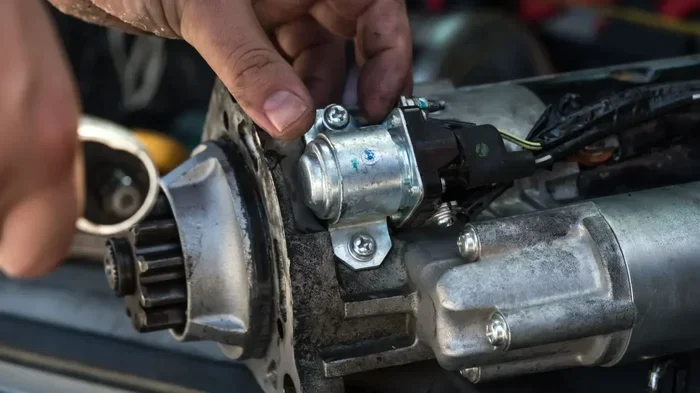
Before we dive into symptoms, let us quickly cover the basics. Your starter motor is a small but powerful electric device. When you turn your ignition key or push the start button, the starter engages with the engine’s flywheel and cranks it over. This is what gets the combustion cycle started.
Without a working starter, your engine simply will not fire. It does not matter how much fuel or spark you have. If the starter cannot crank the engine, the car will not start. That is why a failing starter motor is such a big deal. It leaves you sitting in one place when you need to be somewhere else.
Starters are built to last a long time. Most last well over 100,000 miles. But they do wear out. Electrical connections corrode, internal brushes degrade, and the solenoid can fail. Understanding how these parts work helps you make sense of the symptoms ahead.
Common Signs That Your Starter Is Going Bad
The body is good at communicating problems. A bad starter is usually loud and obvious. Here are the most common signs to watch for.
1. A Single Click or Rapid Clicking When You Turn the Key
This is the number one telltale sign. You turn the ignition and hear a single click or a rapid series of clicks. The starter solenoid is trying to engage, but the motor is not spinning. Or it is spinning weakly. Either way, this clicking noise means something is wrong with the starter assembly.
A single click often points to a bad solenoid or a dead starter motor. Rapid clicking usually means the starter is receiving power but cannot turn the engine. This could be due to worn drive gears or a burned-out motor.
2. Grinding or Whining Noise During Startup
Do you hear a grinding or whining sound when you try to start the car? That is the sound of metal grinding against metal. The starter drive gear is not meshing properly with the flywheel ring gear.
This kind of grinding noise is serious. Every time you ignore it, you damage the flywheel more. What might have been a simple starter replacement can turn into a much bigger and more expensive repair. If you hear grinding, stop trying to start the car and get it checked.
3. Intermittent Starting Problems
Sometimes the starter works fine. Other times, it just refuses to cooperate. Intermittent starter problems are tricky because they come and go. You might start the car fine in the morning but struggle in the afternoon.
This usually points to a failing starter relay or loose electrical connections. Heat expands the metal, and bad connections lose contact. If your car starts sometimes and not others, do not assume it is fine. Get it inspected before it leaves you stranded one day.
4. Slow Cranking or Weak Crank
A healthy starter cranks the engine quickly and confidently. If your engine turns over slowly or labored, the starter motor is struggling. This slow cranking symptom often gets worse in cold weather because the engine oil thickens and the battery voltage drops.
However, do not automatically blame the battery. A weak starter motor will crank slowly even with a fully charged battery. You need to test both components to find the real cause.
5. No Sound at All When You Turn the Key
Complete silence when you turn the key can mean a dead starter, a broken ignition switch, or a failed electrical path. If your lights and accessories work but the car makes no sound at all when you hit the start button, the starter is a prime suspect.
Before you panic, check the obvious first. Make sure the transmission is in Park or Neutral. Many cars will not start if the gear selector is not in the right position. If it is in Park and still silent, move on to the next step.
How to Test If Your Starter Is Bad
Symptoms give you clues, but testing gives you proof. You do not need to be a professional mechanic to run a few basic checks at home. Here is how to test your starter step by step.
Step 1: Check the Battery First
Before you blame the starter, rule out the battery. A dead or weak battery can mimic every symptom of a bad starter. Use a multimeter to check the battery voltage. A fully charged battery should read 12.6 volts or higher.
If the battery reads below 12.0 volts, charge it fully and try starting again. If the car starts fine after charging, the battery was the problem, not the starter. But if the battery is strong and the car still will not start, move to the next step.
Step 2: Listen for the Solenoid Click
Have someone turn the key while you listen closely to the starter area. You should hear a clear single click from the solenoid, followed by the motor spinning. If you hear the click but no spinning, the motor is likely burned out. If you hear nothing at all, the solenoid or the electrical feed to the starter may be the issue.
Step 3: Tap the Starter Gently
This sounds strange, but it works. A gentle tap with a rubber mallet on the starter body can sometimes free a stuck motor. If the car starts after tapping, your starter has a sticking issue. This is a temporary fix, but it confirms the starter is the problem.
Step 4: Test Voltage at the Starter
Set your multimeter to DC voltage. Place the probes on the starter terminals while someone turns the key. You should see at least 10.5 volts at the starter during cranking. If the voltage drops significantly or reads zero, you have a wiring problem or a bad starter that is not receiving enough power.
For more guidance on electrical testing, check out our article on how to handle low key battery issues since similar electrical diagnostics apply.
Step 5: Check the Ground and Connections
Corroded or loose cables are a sneaky cause of starter problems. Inspect the positive and negative cables at the battery and at the starter. Clean any corrosion with a wire brush and tighten all connections. A poor ground connection can prevent the starter from getting the current it needs.
Starter Problems vs. Battery Problems: How to Tell the Difference
This is where many people get confused. A bad battery and a bad starter can produce very similar symptoms. Both can cause a slow crank or no start. But the fixes are completely different, so you need to know which one you are dealing with.
Here is a simple way to think about it. The battery provides the power. The starter uses that power to crank the engine. If your lights are dim and the dashboard flickers, the battery is weak. If the lights are bright but the engine will not crank, the starter is likely the issue.
Another clue is the sound. A dying battery usually produces a slow, labored crank. A bad starter often produces a click, a grind, or complete silence. If you are still unsure, read our detailed guide on whether starters go bad without warning for a deeper look at how these failures develop over time.
| Symptom | Likely Cause | Quick Test |
|---|---|---|
| Clicking but no crank | Bad starter or solenoid | Tap starter gently; check voltage at starter |
| Slow crank | Weak battery or failing starter | Test battery voltage first |
| Grinding noise | Worn starter drive gear | Stop cranking immediately; inspect gears |
| No sound at all | Bad starter, relay, or ignition switch | Check neutral safety switch and relay |
| Intermittent failure | Loose connection or failing relay | Wiggle wires; test relay with multimeter |
Understanding this difference saves you money. You do not want to replace a perfectly good starter when the real problem was a $50 battery. And you do not want to buy a new battery when the starter is the one that needs attention.
What To Do When You Confirm a Bad Starter
So the tests are done. Your starter is bad. Now what? You have a few options, and the right choice depends on your budget, skill level, and the type of vehicle you drive.
Option 1: Replace the Starter Yourself
If you enjoy working on your car, replacing a starter is a very doable DIY job. You will need a socket set, a wrench, and maybe a pry bar. The starter is usually located near the bottom of the engine, bolted to the transmission housing.
Disconnect the battery first. Remove the electrical connections. Unbolt the mounting bolts. Pull the old starter out. Reverse the steps to install the new one. It usually takes about one to two hours for most vehicles.
For general DIY repair guidance, you can also check out our piece on replacing a throttle body yourself since the troubleshooting mindset and safety steps are similar.
Option 2: Buy a Rebuilt Starter
A rebuilt starter costs less than a brand-new OEM unit. These are starters that have been disassembled, cleaned, and reassembled with new components. They work well for most applications and can save you 30 to 50 percent compared to a new part.
Just make sure you buy from a reputable supplier. A poorly rebuilt starter will fail again quickly, and you will be back to square one.
Option 3: Visit a Mechanic
If you are not comfortable working under the car, a mechanic is the way to go. A professional can diagnose the exact problem, recommend the right part, and install it correctly. The average starter replacement cost ranges from $200 to $600, including parts and labor.
Shop around for quotes. Some independent shops charge significantly less than dealerships for this type of repair. Get at least two estimates before committing.
Common Mistakes People Make With Starter Problems
When your car will not start, panic sets in fast. People make mistakes in the heat of the moment. Here are the most common ones to avoid.
- Keep cranking the engine. Repeated attempts overheat the starter and can warp the flywheel. If the car does not start after two or three tries, stop and diagnose the problem.
- Assume it is always the battery. Many people jump the car, it starts, and they think the problem is solved. But if the starter is failing, jump-starting is only a temporary band-aid.
- Ignore the clicking sound. A click today can be a dead starter tomorrow. Address it early before you are stranded.
- Buy the cheapest part available. A low-quality starter may save money upfront but fail within months. Invest in a reliable brand.
- Skip the ground connection check. Corroded grounds mimic starter failure. A simple cleaning can sometimes solve the entire problem.
Avoiding these mistakes keeps your wallet intact and your car running. A little patience goes a long way when diagnosing electrical problems.
How to Prevent Starter Failure Before It Happens
The best fix for a bad starter is to never let it get bad in the first place. Preventive maintenance keeps your starter healthy for years.
- Keep battery terminals clean. Corrosion on the terminals restricts current flow and stresses the starter. Clean them with a baking soda and water solution every few months.
- Check the ground cable regularly. A loose or corroded ground cable forces the starter to work harder. Inspect it during every oil change.
- Turn off all accessories before starting. Headlights, AC, and the radio draw power that the starter needs. Give the starter full access to the battery’s power.
- Do not hold the key in the start position too long. Holding the key for more than five seconds at a time overheats the starter. If the car does not start, wait 30 seconds between attempts.
- Address slow cranking early. A slow crank today is a dead starter tomorrow. Get it checked at the first sign of weakness.
These small habits add up. They extend the life of your starter and reduce the chance of unexpected breakdowns.
When to Consider a Full Electrical System Check
Sometimes a bad starter is not just about the starter itself. Electrical issues elsewhere in the vehicle can cause starter problems. A weak alternator, a blown fuse, or a faulty ignition switch can all prevent the starter from receiving the signal or power it needs.
If you have replaced the starter and the problem persists, it is time for a broader electrical inspection. A mechanic with a proper diagnostic scanner can trace the electrical path from the battery to the starter and find hidden faults.
Pay attention to warning signs like flickering dashboard lights or unusual behavior from other electrical components. These can point to a larger electrical issue that needs professional attention.
Key Takeaways
- Clicking, grinding, slow cranking, or silence are the top signs of a bad starter. Do not ignore them.
- Test the battery first to rule out the simplest and cheapest cause of no-start conditions.
- A multimeter is your best friend. Voltage tests at the starter confirm whether the motor is receiving proper power.
- Replacement costs between $200 and $600 for most vehicles, and DIY is possible if you are comfortable working under the car.
- Preventive maintenance like cleaning terminals and checking grounds keeps your starter running strong.
- Do not keep cranking when the starter is struggling. Each failed attempt causes more damage.
Conclusion
Knowing how to tell if your starter is bad puts you in control of the situation. You do not have to wait for a tow truck or guess what is wrong. The symptoms are clear, the tests are simple, and the fixes are straightforward.
Start with the basics. Listen for clicking or grinding sounds. Check the battery. Test the voltage at the starter. If you confirm the problem, choose the fix that fits your budget and comfort level. Whether you replace it yourself or hire a mechanic, the important thing is to act now.
A bad starter will not fix itself. It only gets worse over time. Address the problem early, keep your electrical connections clean, and your car will start reliably for miles to come. Trust your instincts, use the tools you have, and you will handle this like a pro.
Frequently Asked Questions
Can I drive my car if the starter is bad?
No, a bad starter means your car will not start. You cannot drive it at all until the starter is repaired or replaced. Even if the car starts occasionally with a bad starter, it is unreliable and could leave you stranded at any moment.
How long does a starter replacement take?
A professional mechanic usually takes one to three hours. If you are doing it yourself, plan for two to four hours depending on your vehicle’s setup and accessibility. Some trucks and SUVs have starters that are harder to reach, which adds time.
Is it safe to tap a bad starter to get it working?
Tapping the starter with a rubber mallet is a common temporary fix, but it is not a long-term solution. It can free a stuck motor temporarily, but the underlying problem still exists. Get the starter properly tested and replaced as soon as possible.
How much does it cost to replace a starter?
The total cost ranges from $200 to $600 for most vehicles. The part itself costs between $100 and $400, and labor adds another $100 to $200. Independent shops are usually less expensive than dealerships for this repair.
Can a bad starter damage the engine?
Yes, if you keep trying to start the car with a failing starter, you can damage the flywheel ring gear. Grinding noises indicate that the gears are already wearing. Continuing to crank in this condition leads to much more expensive repairs down the road.
What causes a starter to go bad prematurely?
Common causes include corroded electrical connections, a weak battery that forces the starter to work harder, frequent short trips that do not allow the battery to fully recharge, and general wear over time. Keeping connections clean and the battery healthy helps the starter last longer.