How Much Oil a Hyundai Elantra Takes and Why It Matters
Knowing how much oil a Hyundai Elantra takes is essential for keeping your engine healthy and running smoothly. Most Hyundai Elantra models require between 3.5 and 4.5 quarts of oil, depending on the engine type and year. Using the wrong amount or the wrong oil type can lead to serious engine problems over time. This guide covers everything you need to know about oil capacity, oil type, change intervals, and common mistakes to avoid.
If you own a Hyundai Elantra, you already know it is one of the most popular sedans on the road. It is reliable, fuel-efficient, and affordable. But like any car, it needs proper maintenance to keep running its best. One of the most important things you can do is make sure you have the right amount of oil in your engine.
So, how much oil does a Hyundai Elantra actually take? The answer depends on your specific model year and engine type. Most Hyundai Elantra models require between 3.5 and 4.5 quarts of oil. But getting the exact amount right matters more than most people realize. Too little oil and your engine runs dry. Too much oil and you risk serious damage.
In this guide, we will walk you through everything you need to know about how much oil a Hyundai Elantra takes. We will cover the right oil type, how often to change it, common mistakes, and practical tips to keep your engine in top shape. Whether you are a DIY mechanic or just want to understand your car better, this article has you covered.
Key Takeaways
- Oil Capacity: Most Hyundai Elantra models take between 3.5 and 4.5 quarts of engine oil.
- Oil Type Matters: Using the correct viscosity and oil type protects your engine and improves fuel economy.
- Change Intervals: Most Elantras need an oil change every 5,000 to 7,500 miles for conventional oil.
- Overfilling Is Dangerous: Too much oil can cause engine damage, leaks, and costly repairs.
- Check Regularly: Monitoring your oil level between changes helps catch problems early.
- Use Quality Filters: A good oil filter keeps contaminants out and extends engine life.
- Follow the Manual: Your owner’s manual has the exact specifications for your specific Elantra model.
📑 Table of Contents
- Understanding Oil Capacity for the Hyundai Elantra
- The Right Oil Type for Your Hyundai Elantra
- Step-by-Step Oil Change Guide for the Hyundai Elantra
- Signs Your Hyundai Elantra Needs an Oil Change
- Common Oil Mistakes to Avoid
- How Often Should You Change the Oil in Your Hyundai Elantra?
- Quick Tips for Maintaining Your Hyundai Elantra’s Engine Oil
- Expert Insights on Hyundai Elantra Oil Maintenance
- Conclusion
Understanding Oil Capacity for the Hyundai Elantra
The oil capacity of your Hyundai Elantra is not a one-size-fits-all number. Different engine sizes and model years require different amounts. Let us break it down so you know exactly what your car needs.
Oil Capacity by Engine Type
The Hyundai Elantra has been sold with several different engines over the years. Each engine has its own oil capacity. Here is a general breakdown:
- 2.0L Inline-4 Engine (Most Common): Requires about 3.5 to 4.0 quarts of oil including the filter.
- 1.6L Turbo Engine (Elantra N): Typically needs around 4.0 to 4.5 quarts with the filter.
- Older Models (Pre-2015): May require slightly less, around 3.5 quarts depending on the engine variant.
Always check your owner’s manual for the exact number. The manual will also tell you whether the figure includes the oil filter or not. This is an important distinction because some manufacturers list the capacity with the filter and some without.
Why Oil Capacity Matters
You might wonder why the exact oil amount matters so much. The truth is that oil plays a critical role in your engine. It lubricates moving parts, reduces friction, cools the engine, and carries away contaminants. If you do not have the right amount, your engine cannot do its job properly.
Running low on oil causes increased friction between metal parts. This leads to overheating and, eventually, engine failure. On the other hand, overfilling causes oil to foam, which reduces its lubricating ability. Excess oil can also damage the catalytic converter and cause blue smoke from the exhaust.
Getting the oil capacity right for your Hyundai Elantra is one of the simplest ways to protect your investment. It takes just a few minutes to check and costs very little compared to engine repairs.
The Right Oil Type for Your Hyundai Elantra
Knowing how much oil to add is only half the battle. You also need to use the right type of oil. The wrong oil can reduce engine performance and even cause damage over time.
Synthetic vs Conventional Oil
Most modern Hyundai Elantra models work best with synthetic oil. Synthetic oil offers better protection at extreme temperatures. It flows more smoothly in cold weather and resists breaking down at high temperatures. This means your engine stays protected longer between oil changes.
Conventional oil is still an option for older models or drivers on a tight budget. It works fine for basic driving conditions. However, it breaks down faster than synthetic oil and needs to be changed more frequently.
If you are unsure which type to use, check your owner’s manual. Hyundai generally recommends full synthetic oil for newer Elantra models. Some older models may accept conventional oil. Using the wrong type will not destroy your engine overnight, but it will reduce performance and shorten engine life.
Viscosity Grades Explained
Oil viscosity is the thickness of the oil at different temperatures. You will see it written on the oil bottle as something like 0W-20 or 5W-30. The first number (with the W) tells you how the oil flows in cold weather. The second number tells you how it performs at normal operating temperature.
Most Hyundai Elantra models use 0W-20 oil. This is a thin, lightweight oil that flows quickly and improves fuel economy. Some older models may use 5W-30 instead. Always double-check what your specific model requires before purchasing oil.
Using the wrong viscosity can affect oil pressure and engine performance. If the oil is too thick, it does not flow properly in cold starts. If it is too thin, it may not provide adequate protection at high temperatures. Hyundai engineers designed the Elantra engine to work with a specific viscosity, so stick with what the manufacturer recommends.
Some drivers wonder if they can use 5W-30 oil in their Elantra when the manual says 0W-20. In an emergency, it will not cause immediate harm. But for long-term use, always follow the manufacturer’s recommendation. If you are curious about oil compatibility across different vehicles, you might find our article on Can I Use 5W 30 Oil in a Toyota Corolla helpful for understanding viscosity differences.
Step-by-Step Oil Change Guide for the Hyundai Elantra
Changing the oil in your Hyundai Elantra is one of the easiest maintenance tasks you can do at home. It saves money and gives you a better understanding of your car. Here is a simple step-by-step guide.
What You Will Need
- The correct amount of oil for your Elantra (3.5 to 4.5 quarts)
- The right oil type (usually 0W-20 synthetic)
- A new oil filter (check your manual for the correct part number)
- An oil filter wrench
- A socket wrench and drain pan
- A funnel
- Gloves and safety glasses
Draining and Refilling
First, make sure your engine is warm but not hot. Running the car for about two minutes helps the oil flow out more easily. Then, park on a level surface and engage the parking brake.
Locate the drain plug underneath the engine. Place your drain pan beneath it and carefully remove the plug. Let the old oil drain completely. This usually takes about five to ten minutes. While the oil drains, remove the old oil filter using the filter wrench. Apply a thin layer of fresh oil to the new filter’s gasket before installing it.
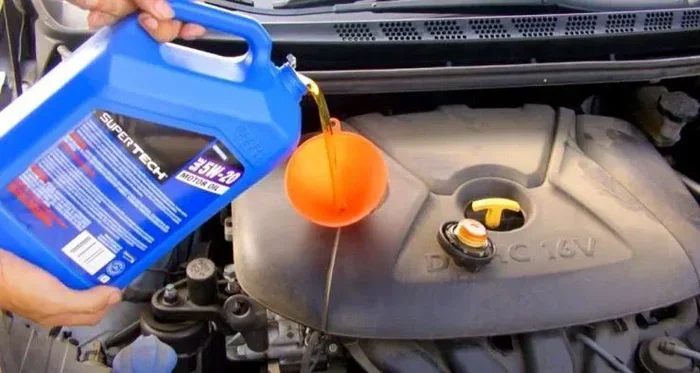
Once the oil has stopped dripping, reinstall the drain plug and tighten it snugly. Do not overtighten, as this can strip the threads. Now, open the oil fill cap on top of the engine and pour in the new oil using a funnel. Add about three-quarters of the total capacity first. Wait a minute, then check the level with the dipstick. Add more oil gradually until the level reaches the full mark on the dipstick.
After filling, start the engine and let it run for about one minute. Check for leaks around the drain plug and filter. Turn off the engine, wait a few minutes for the oil to settle, and check the dipstick again. You are all set.
Disposing of Used Oil Properly
Never dump used oil down the drain or in the trash. Take it to a local auto parts store or recycling center. Most stores accept used oil for free. Proper disposal protects the environment and keeps you on the right side of local regulations.
Signs Your Hyundai Elantra Needs an Oil Change
Even if you follow a regular schedule, it is good to know the warning signs that your Elantra needs fresh oil. Catching these signs early can prevent costly engine damage.
- Dark or Dirty Oil: Fresh oil is amber in color. As it ages, it turns dark brown or black. If your dipstick shows very dark oil, it is time for a change.
- Engine Noise: Clean oil lubricates engine parts quietly. If you hear increased knocking or ticking sounds, your oil may be degraded and no longer providing proper lubrication.
- Oil Pressure Warning Light: If this light comes on, pull over safely and check your oil level immediately. Low oil pressure can cause severe engine damage within minutes.
- Burning Oil Smell: A smell of burning oil inside the cabin could indicate an oil leak or overfilling. Have it checked right away.
- Reduced Fuel Economy: Old or low oil increases engine friction, which makes your engine work harder and use more fuel.
- Exhaust Smoke: Blue or gray smoke from the tailpipe can signal that oil is burning inside the engine. This is a serious sign that needs immediate attention.
If you notice any of these symptoms, do not wait. Check your oil level and change it if needed. Ignoring these signs can lead to engine problems that cost thousands of dollars to fix. For more information on what happens when you ignore oil issues, check out our article on Can I Drive My Car With Too Much Oil In It to understand the risks of improper oil levels.
Common Oil Mistakes to Avoid
Even experienced car owners make oil-related mistakes. Here are the most common ones and how to avoid them.
Overfilling the Oil
It is tempting to add a little extra oil just to be safe. But overfilling is one of the worst things you can do. Excess oil gets churned up by the crankshaft and creates foam. Foamy oil loses its lubricating properties. This can lead to increased engine wear and even oil pressure problems.
In severe cases, overfilled oil can enter the combustion chamber and cause blue smoke, fouled spark plugs, and catalytic converter damage. If you accidentally overfill, have the excess oil drained as soon as possible.
Underfilling the Oil
Running low on oil is just as dangerous. When oil levels drop below the minimum mark, the engine does not get full lubrication. Metal parts grind against each other, causing heat buildup and wear. Over time, this leads to engine seizure and complete failure.
Make it a habit to check your oil level at least once a month. A quick check with the dipstick takes less than a minute and can save you from a major repair bill.
Using the Wrong Oil Filter
The oil filter removes contaminants from your oil. Using the wrong filter can mean poor filtration or even oil leaks. Always use the filter recommended for your specific Elantra model year. If you are unsure about filter quality, our article on Are Toyota Oil Filters Good offers helpful insights into choosing quality filters, even though it focuses on Toyota vehicles.
Skipping Oil Changes
Some drivers push their oil changes way past the recommended interval. Fresh oil breaks down over time. It loses its ability to lubricate and cool the engine effectively. Skipping oil changes is one of the fastest ways to shorten your engine’s lifespan.
How Often Should You Change the Oil in Your Hyundai Elantra?
Oil change frequency depends on several factors, including the type of oil you use and your driving conditions.
- Synthetic Oil: Change every 7,500 to 10,000 miles for normal driving conditions.
- Conventional Oil: Change every 5,000 to 7,500 miles.
- Severe Driving Conditions: If you frequently drive in stop-and-go traffic, tow heavy loads, or drive in extreme heat or cold, reduce your change interval by 20 to 30 percent.
Your owner’s manual will have the manufacturer’s recommended oil change schedule for your specific Elantra model. Follow it closely. Modern Hyundai Elantras also have oil life monitoring systems that track your driving habits and alert you when it is time for a change.
Do not rely solely on the dashboard indicator, though. Use it as a guide, but also pay attention to the actual mileage and the condition of your oil. Regular oil changes are one of the cheapest and most effective ways to extend the life of your engine.
Keeping up with oil changes also helps maintain your car’s resale value. A well-maintained Elantra with complete service records will fetch a higher price when it is time to sell or trade in.
Quick Tips for Maintaining Your Hyundai Elantra’s Engine Oil
- Check oil levels monthly: Get into the habit of checking your dipstick regularly. It only takes a couple of minutes.
- Keep a record: Write down every oil change date, mileage, and oil type used. This helps you stay on track and is useful when selling the car.
- Warm up the engine before checking: Wait a minute or two after driving to let the oil settle and give you an accurate reading.
- Do not mix oil types: Stick with one type of oil. Mixing synthetic and conventional oil reduces the benefits of synthetic.
- Replace the drain plug gasket: When changing oil, inspect the drain plug gasket and replace it if it looks worn. This prevents leaks.
- Check for leaks after an oil change: Always look under your car after an oil change to make sure nothing is dripping.
Expert Insights on Hyundai Elantra Oil Maintenance
According to most automotive experts, the biggest oil mistake Hyundai Elantra owners make is not checking their oil level often enough. Many drivers assume that because the car looks fine, everything is fine underneath. But oil levels can drop gradually without any visible signs.
Another expert tip is to always replace the oil filter during every oil change. A clogged filter restricts oil flow and reduces engine protection. It is a small part that costs very little but makes a big difference in engine longevity.
Experts also recommend warming up the car for at least 30 seconds before driving in cold weather. This allows the oil to circulate and reach all the moving parts. In cold climates, this simple habit can significantly reduce engine wear over time.
If you are interested in how long your Elantra can sit without being driven, you might want to check out our article on How Long Can A Hybrid Sit Without Being Driven. While it focuses on hybrids, many of the same principles apply to keeping any car in good shape during periods of inactivity.
Conclusion
Understanding how much oil a Hyundai Elantra takes is one of the most important pieces of knowledge every Elantra owner should have. Most models need between 3.5 and 4.5 quarts of oil, but the exact amount depends on your engine type and model year. Using the right oil type, the correct viscosity, and the proper amount will keep your engine running smoothly for hundreds of thousands of miles.
Do not overlook the importance of regular oil changes, proper disposal of used oil, and routine oil level checks. These simple habits prevent expensive repairs and keep your Elantra performing at its best. Whether you change the oil yourself or take it to a mechanic, staying informed puts you in control of your car’s maintenance.
Your Hyundai Elantra is a great car. With the right care and attention, it will reward you with years of reliable service. Start by getting the oil right. Your engine will thank you for it.
Frequently Asked Questions
How much oil does a 2023 Hyundai Elantra take?
The 2023 Hyundai Elantra with the 2.0L engine typically requires about 3.5 to 4.0 quarts of oil including the filter. Always double-check your owner’s manual for the exact specification for your model.
Can I use 5W-30 oil in my Hyundai Elantra?
Most modern Hyundai Elantra models are designed to use 0W-20 oil. Using 5W-30 may work in a pinch, but it is not recommended for long-term use. Check your owner’s manual or consult a dealer to confirm the correct viscosity for your specific model.
How often should I change the oil in my Hyundai Elantra?
For synthetic oil, change every 7,500 to 10,000 miles under normal driving conditions. If you use conventional oil, change every 5,000 to 7,500 miles. Severe driving conditions like extreme temperatures or heavy traffic require more frequent changes.
What happens if I overfill my Hyundai Elantra with oil?
Overfilling causes oil to foam and lose its lubricating ability. It can also lead to blue exhaust smoke, fouled spark plugs, and damage to the catalytic converter. If you overfill, have the excess oil drained promptly.
Can I check my Hyundai Elantra’s oil level with the engine off?
Yes, but for the most accurate reading, wait a few minutes after turning off the engine. This allows the oil to drain back into the oil pan and settle, giving you a more precise measurement on the dipstick.
Is synthetic oil worth it for a Hyundai Elantra?
Yes, synthetic oil provides superior protection, better performance in extreme temperatures, and longer intervals between changes. For most modern Hyundai Elantra models, full synthetic oil is the recommended choice and offers excellent value for the price.