Is Section 179 Going Away in 2025 Find Out What To Expect
Section 179 is not going away in 2025, but changes to limits and eligibility may affect your business tax strategy. Understanding the Section 179 deduction rules now helps you maximize your tax write-off and avoid costly mistakes. This guide breaks down everything you need to know about Section 179 for 2025, including limits, qualifying equipment, and smart planning tips.
This is a comprehensive guide about Is Section 179 Going Away in 2025?.
Key Takeaways
- Section 179 is still active for 2025: The deduction has not been eliminated and remains a valuable tool for businesses.
- The deduction limit has changed: The Section 179 dollar limit for 2025 may differ from prior years, so check the current figures.
- Qualifying equipment includes vehicles: Business vehicles and automotive equipment can still qualify under Section 179 rules.
- Bonus depreciation works alongside Section 179: These two deductions can complement each other for maximum savings.
- Phase-out thresholds matter: Once your total equipment spending crosses a certain limit, your Section 179 deduction gets reduced.
- Planning ahead saves money: Timing your equipment purchases strategically can boost your tax benefits significantly.
- Consult a tax professional: Always work with a CPA or tax advisor to ensure you qualify and maximize your deduction.
[FEATURED_IMAGE_PLACEHOLDER]
Every year, business owners breathe a sigh of relief when tax season rolls around. One of the most powerful tools in their arsenal is the Section 179 deduction. But rumors swirl every few years about whether this tax benefit will stick around. If you have been hearing chatter about Section 179 going away in 2025, you are not alone. Let us clear the air and walk through exactly what to expect.
The Section 179 deduction allows businesses to deduct the full cost of qualifying equipment in the year they purchase it. Instead of spreading the deduction over several years through regular depreciation, you can write off the entire amount right away. This is a huge advantage for small business owners, fleet managers, and anyone investing in business vehicles or heavy equipment. The question on everyone’s mind is whether Congress will let this benefit expire or make changes going forward.
Here is the good news. Section 179 is not going away in 2025. The deduction remains in place and continues to offer meaningful tax savings. However, the rules around limits, eligible property, and phase-out thresholds can shift from year to year. Staying informed helps you make smarter decisions about your business purchases and tax planning strategy.
In this article, we will cover everything you need to know. From the current Section 179 limits to the types of equipment that qualify, we have you covered. We will also look at how bonus depreciation works alongside Section 179, common mistakes to avoid, and practical tips to maximize your deduction. Whether you run a small auto repair shop or manage a fleet of delivery trucks, this guide will help you navigate the Section 179 landscape with confidence.
What Is Section 179 and Why Does It Matter?
The Section 179 deduction is a federal tax provision that lets businesses deduct the full purchase price of qualifying equipment and software in the year of purchase. Instead of spreading the cost over time through regular depreciation, you can take a lump-sum deduction on your tax return. This is one of the most popular business tax deductions available today.
For the automotive industry, Section 179 is especially valuable. Business vehicles, repair equipment, diagnostic tools, and shop machinery all fall under the umbrella of qualifying property. When you purchase a work truck for your plumbing business or a delivery van for your e-commerce startup, the Section 179 deduction can significantly reduce your taxable income.
Here is why Section 179 matters so much for business owners:
- Immediate tax relief: You do not have to wait years to benefit from your purchase. The deduction happens in the same tax year.
- Cash flow improvement: Lower taxable income means more money stays in your pocket for operations and growth.
- Simplified record-keeping: You avoid the complexity of tracking depreciation schedules over multiple years.
- Encourages investment: The deduction incentivizes businesses to purchase new equipment, which stimulates economic growth.
The Section 179 deduction applies to both new and used equipment, as long as the property meets the IRS guidelines. You can claim it on vehicles, computers, office furniture, manufacturing machinery, and more. For automotive businesses, this includes everything from passenger vehicles used for sales calls to heavy-duty trucks used for towing and transport.
Who Can Claim the Section 179 Deduction?
Any business that purchases or finances qualifying equipment can claim the Section 179 deduction. This includes sole proprietorships, partnerships, S corporations, and C corporations. The key requirement is that the equipment must be used for business purposes more than 50% of the time. If you use a vehicle partly for personal use, you can still claim a partial deduction based on the business-use percentage.
Is Section 179 Going Away in 2025?
The short answer is no. Section 179 is not going away in 2025. The deduction has been a staple of the U.S. tax code for decades, and Congress has repeatedly extended and updated it. While there have been proposals to change or eliminate the deduction, none have passed into law as of now.
However, that does not mean the rules stay the same every year. Congress often adjusts the Section 179 dollar limit, the phase-out threshold, and the list of qualifying property. These changes can affect how much you can deduct and what types of equipment qualify. Staying current with these updates is essential for effective tax planning.
What Changes Have Happened in Recent Years?
Over the past several years, the Section 179 limits have seen adjustments. The Tax Cuts and Jobs Act of 2017 made significant changes, including raising the deduction limit and expanding the types of eligible property. Since then, Congress has passed short-term extensions that kept the existing limits in place. For 2025, the limits are expected to remain similar to recent years unless new legislation is passed.
Some of the notable changes in recent Section 179 history include:
- Increased dollar limits: The maximum Section 179 deduction has risen over the years to keep pace with inflation and business needs.
- Expanded eligible property: More types of equipment now qualify, including certain software and off-the-shelf computer programs.
- Phase-out threshold adjustments: The point at which your deduction begins to reduce has been raised, benefiting larger businesses.
- Vehicle-specific limits: Passenger vehicles have their own set of Section 179 limits to prevent abuse of the deduction.
What Should You Watch For in 2025?
While Section 179 is not going away, there are always things to watch for. Congressional budget negotiations, fiscal policy changes, and broader tax reform efforts can all impact the future of the deduction. The best approach is to stay informed and plan ahead. Do not wait until the last minute to make equipment purchases if you want to maximize your Section 179 deduction for the tax year.
Expert Insight
Tax professionals recommend reviewing your Section 179 strategy every quarter. Waiting until December to make purchases can limit your options and reduce your savings. Early planning gives you the flexibility to time your investments for maximum tax benefit.
Section 179 Limits and Eligibility for 2025
Understanding the Section 179 limits and eligibility requirements is crucial for making the most of this deduction. The IRS sets specific dollar amounts and thresholds that determine how much you can claim. These numbers can change from year to year, so always check the latest figures before filing.
The Section 179 Dollar Limit
The Section 179 dollar limit is the maximum amount you can deduct in a single tax year. For 2025, this limit is expected to be in the range of $1.16 million to $1.22 million, depending on inflation adjustments and any legislative changes. This is a generous amount that covers most small business equipment purchases.
Keep in mind that the dollar limit applies to the total cost of all qualifying equipment you purchase during the year. If you buy multiple items, the combined cost must stay under the limit to qualify for the full deduction.
The Phase-Out Threshold
The phase-out threshold is the total amount of equipment you can purchase before your Section 179 deduction starts to decrease. Once your qualifying equipment spending exceeds this threshold, your deduction is reduced dollar for dollar. For 2025, the phase-out threshold is expected to be around $2.89 million to $3.05 million.
For most small businesses, the phase-out threshold is high enough that it does not pose a problem. However, larger businesses that invest heavily in equipment may need to be more strategic about how they structure their purchases.
Qualifying Equipment for the Automotive Sector
Not all equipment qualifies for the Section 179 deduction. The IRS has specific rules about what counts as Section 179 qualified property. For the automotive industry, the following items typically qualify:
- Business vehicles: Trucks, vans, and SUVs used primarily for business purposes.
- Repair and diagnostic equipment: Lift systems, engine analyzers, tire machines, and alignment tools.
- Shop furniture and fixtures: Workbenches, tool cabinets, and shelving units.
- Computers and software: Off-the-shelf software used for business operations, inventory management, or design.
- Manufacturing and production equipment: Assembly line machinery, welding equipment, and paint systems.
Passenger vehicles have special limits under Section 179. The IRS caps the deduction for cars, SUVs, and vans based on their gross vehicle weight and depreciable basis. For 2025, the Section 179 limit for passenger vehicles is expected to be around $20,200 to $21,000, depending on the vehicle category and any legislative updates.
What Does Not Qualify?
It is equally important to know what does not qualify. The following items generally do not meet the Section 179 requirements:
- Real estate and buildings
- Equipment used outside the United States (with limited exceptions)
- Leased equipment (you must own or finance the property)
- Equipment purchased solely for personal use
- Intangible assets like patents or copyrights (unless they are certain types of computer software)
Section 179 vs. Bonus Depreciation: How They Work Together
Many business owners confuse Section 179 with bonus depreciation, but they are two different tax benefits that can work together. Understanding the difference helps you choose the best strategy for your business.
Section 179 lets you deduct the full cost of qualifying equipment in the year of purchase, up to the annual dollar limit. You must elect to use Section 179, and you can choose which specific items to apply it to.
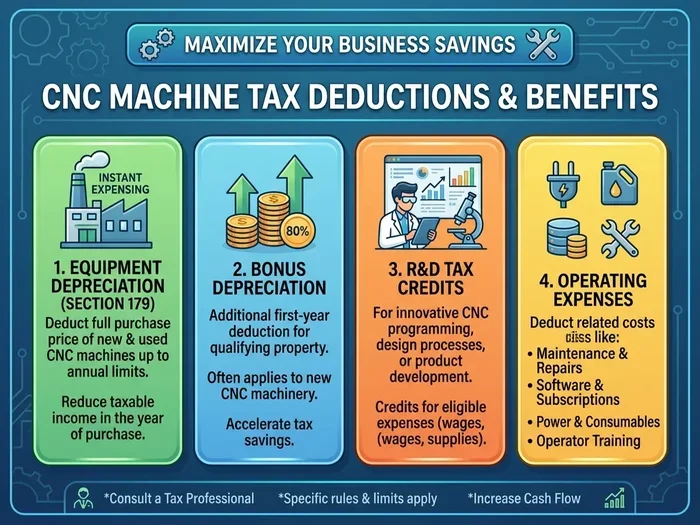
Bonus depreciation allows you to deduct a percentage of the cost of qualifying property in the first year. For 2025, the bonus depreciation rate is expected to be 60%, down from 100% in prior years due to scheduled phase-down provisions under the Tax Cuts and Jobs Act.
Here is a quick comparison of the two deductions:
| Feature | Section 179 | Bonus Depreciation |
|---|---|---|
| Deduction Type | Full cost of qualifying equipment | Percentage of cost (60% for 2025) |
| Dollar Limit | Yes, has an annual limit | No dollar limit |
| Election Required | Yes | No (automatic unless you opt out) |
| Applies to Used Equipment | Yes | Yes |
| Vehicle Limits | Yes, specific caps | Yes, specific caps |
| Can Be Combined | Yes, with bonus depreciation | Yes, with Section 179 |
The smartest approach is often to use both deductions together. You can apply Section 179 to the full cost of qualifying equipment first, then use bonus depreciation on any remaining balance. This combination can significantly reduce your taxable income and keep more money in your business.
Quick Tips for Combining Section 179 and Bonus Depreciation
- Start with Section 179: Apply the Section 179 deduction first to maximize your immediate write-off.
- Then apply bonus depreciation: Use bonus depreciation on the remaining cost of the equipment.
- Track your numbers carefully: Keep detailed records of each purchase and the deduction applied.
- Consult your tax advisor: A CPA can help you optimize the combination for your specific situation.
Common Mistakes to Avoid with Section 179
Even though the Section 179 deduction is powerful, mistakes can cost you money. Here are the most common errors business owners make and how to avoid them.
1. Not Keeping Proper Documentation
The IRS requires detailed records to support your Section 179 deduction. Without proper documentation, you risk losing the deduction during an audit. Keep receipts, invoices, purchase agreements, and proof of business use for every piece of qualifying equipment.
2. Exceeding the Dollar Limit
Many business owners assume they can deduct the full cost of all equipment purchases without limits. This is not true. The Section 179 dollar limit caps how much you can deduct in a single year. If you purchase more than the limit, you must carry forward the excess to future years or use other depreciation methods.
3. Ignoring the Business-Use Requirement
Equipment must be used for business purposes more than 50% of the time to qualify for the Section 179 deduction. If you use a vehicle 60% for business and 40% for personal use, you can only deduct 60% of the cost. Failing to calculate the business-use percentage correctly is a common and costly mistake.
4. Forgetting About the Phase-Out Threshold
Some business owners focus so much on the dollar limit that they overlook the phase-out threshold. Once your total equipment spending exceeds the phase-out amount, your deduction starts to shrink. Planning your purchases to stay under the threshold can save you thousands of dollars.
5. Waiting Until the Last Minute
Procrastination is the enemy of smart tax planning. If you wait until December to make equipment purchases, you may miss out on early-bird discounts, face shipping delays, or rush into buying equipment you do not actually need. Spread your purchases throughout the year and plan ahead.
How to Maximize Your Section 179 Deduction for 2025
Now that you understand the Section 179 deduction inside and out, let us talk about how to get the most out of it. Smart planning and strategic purchasing can make a big difference in your tax savings.
Plan Your Equipment Purchases Strategically
Timing matters when it comes to Section 179. If you know you will be making large equipment purchases, consider spreading them across multiple tax years to stay under the dollar limit and phase-out threshold. This approach allows you to take the full deduction each year instead of losing some to carry-forward rules.
Evaluate Your Business Needs Honestly
Only purchase equipment you truly need for your business. While the Section 179 deduction is generous, buying equipment just for the tax break can lead to wasted money and unused assets. Focus on purchases that genuinely support your business operations and growth goals.
Consider Leasing as an Alternative
Leasing equipment can sometimes offer better tax advantages than purchasing. With a lease, you may be able to deduct the entire lease payment as a business expense. Compare the tax benefits of leasing versus purchasing before making a decision.
Work with a Tax Professional
A qualified CPA or tax advisor who specializes in small business taxes can help you navigate the Section 179 rules and identify opportunities you might miss on your own. The cost of professional tax advice is often far less than the savings it generates.
Keep an Eye on Legislative Changes
Tax laws change frequently, and Section 179 is no exception. Stay informed about any proposed changes to the deduction by following IRS updates, tax news sources, and industry associations. Being proactive gives you a competitive edge when tax planning season arrives.
What the Future Holds for Section 179
While Section 179 is not going away in 2025, the long-term future of the deduction depends on congressional action and broader tax reform efforts. Some lawmakers have proposed making the deduction permanent, while others have suggested reducing the limits or narrowing the list of qualifying property.
For now, business owners can rely on Section 179 as a stable and valuable tax benefit. The deduction has survived multiple expiration threats over the years, and there is no indication it will disappear in the near future. However, the specific limits and rules may continue to evolve, so staying informed is key.
If you are planning major equipment purchases for your automotive business, now is an excellent time to take advantage of the Section 179 deduction. The combination of strong dollar limits, broad eligibility, and the ability to pair it with bonus depreciation makes 2025 a great year to invest in your business.
Conclusion
Section 179 is not going away in 2025. The deduction remains a powerful tool for business owners who want to reduce their taxable income and invest in the equipment they need to grow. From qualifying vehicles and automotive repair equipment to computers and manufacturing machinery, the range of eligible property is broad and flexible.
By understanding the Section 179 limits, avoiding common mistakes, and planning your purchases strategically, you can maximize your tax savings and keep more money working for your business. Combine your Section 179 deduction with bonus depreciation for even greater benefits, and always consult a tax professional to ensure you are making the most of every opportunity.
The bottom line is simple. Section 179 is here to stay for 2025 and beyond. Take advantage of it while it is available, and make smart, informed decisions about your business equipment purchases. Your tax return will thank you.
Frequently Asked Questions
What happens if I exceed the Section 179 dollar limit?
If your qualifying equipment purchases exceed the Section 179 dollar limit, you can carry forward the unused portion to future tax years. You may also use regular depreciation or bonus depreciation to deduct the remaining cost. Working with a tax advisor helps you find the best strategy for handling excess deductions.
Can I use Section 179 for a used vehicle?
Yes, Section 179 applies to both new and used qualifying equipment, including business vehicles. The vehicle must be used for business purposes more than 50% of the time, and you must follow the IRS vehicle-specific deduction limits. Keep records of the purchase price and business-use percentage.
Does Section 179 apply to electric vehicles?
Yes, electric vehicles can qualify for the Section 179 deduction. In addition, electric vehicles may be eligible for separate federal tax credits that stack on top of the Section 179 deduction. Check the IRS guidelines and consult a tax professional to confirm eligibility for both benefits.
Is Section 179 the same as bonus depreciation?
No, Section 179 and bonus depreciation are two different tax benefits. Section 179 lets you deduct the full cost of qualifying equipment up to an annual limit, while bonus depreciation allows you to deduct a percentage of the cost in the first year. You can use both together for maximum savings.
Can a sole proprietor claim Section 179?
Yes, sole proprietors can claim the Section 179 deduction as long as they purchase qualifying equipment for business use. The deduction is claimed on Schedule C of your personal tax return. Sole proprietors must also meet the business-use requirement and stay within the annual limits.
What types of automotive equipment qualify for Section 179?
Qualifying automotive equipment includes business vehicles, repair lifts, diagnostic tools, tire machines, alignment equipment, welding machines, paint systems, and computers used for business operations. The equipment must be used more than 50% of the time for business purposes and meet IRS guidelines for Section 179 qualified property.
Frequently Asked Questions
What is Is Section 179 Going Away in 2025??
Is Section 179 Going Away in 2025? is an important topic with many practical applications.